 Visit Us In-Store: 2/322 Hobart Rd, Youngtown TAS






Bugs for Bugs Eretmocerus hayati
Bugs for Bugs Eretmocerus hayati brings two forms of biological pressure to silverleaf whitefly. The developing wasps parasitise whitefly nymphs, while adult females also feed directly on immature whiteflies. That combination makes Hayati a useful early introduction in programmes for greenhouse vegetables, outdoor vegetables and cotton, especially while whitefly numbers are still low.
A female lays an egg beneath a suitable whitefly nymph. After hatching, the wasp larva enters the nymph and develops inside it, eventually killing the host. The new adult then emerges through a round hole in the whitefly's pupal case and continues the cycle. Adult host feeding adds a second route of attack. These are very small insects, so assessing their work generally involves inspecting whitefly nymphs and pupal cases rather than expecting to see large numbers of adult wasps.
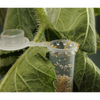
Hayati is supplied as pupae in cotton-plugged vials. The vials can be distributed through the crop and hung from leaf petioles or suitable supports, allowing the emerging adults to leave where they are needed. Release is best started before or at the first signs of whitefly activity, with further introductions guided by crop checks and pest pressure. Well-developed foliage, regular irrigation and protection from dust help provide a suitable environment for establishment.
Pesticide history needs checking before the vials are opened. Harmful residues can prevent the wasps from establishing, even where the whitefly population provides plenty of hosts. Ants can also interfere with their activity. Montdorensis predatory mites can complement Hayati within a whitefly programme, with each organism's requirements considered separately. Prompt attention to emerging adults is important: keep unopened pupae out of direct sunlight and plan release around the first visible wasp activity.
NOTE: Biosecurity restrictions currently prevent this product from being sent to Tasmania.
NOTE: These are living insects with a short shelf life, so we don't hold them in store. Your order ships fresh, direct from the breeder.
Species image credits: An adult of the tiny parasitic wasp Eretmocerus hayati - CSIRO, ScienceImage1358, CC BY3.0, via Wikimedia Commons. source; CC BY 3.0. Cropped to square and resized.
Hits silverleaf whitefly twice, as a parasite and as a predator!

Finds Sparse Hosts
Searches for whitefly even at low densities
Supports Early Intervention
Fits introductions before whitefly pressure builds heavily
Distributes Through Crops
Release vials hang close to developing plants
 Ships Direct
 30-day returns
 Secure checkout
with


 Buy with confidence
-
 Talk to a real grower
Not sure it suits your setup? Call our Youngtown team on
0481 526 666.
-
 Price Beat Guarantee
Found it cheaper elsewhere? We'll
beat any competitor's price by 5%.
-
 Tasmania's own hydroponics shop
Buy online & collect in-store at 2/322 Hobart Rd, Youngtown TAS, usually within the hour.
Bugs for Bugs Eretmocerus hayati
 Key Highlights
expand_more
Key Highlights
- Specifically targets silverleaf whitefly
- Immatures develop inside whitefly nymphs
- Adults also feed on immature whiteflies
- Supplied as pupae in cotton-plugged vials
- Used in greenhouse vegetables, field vegetables and cotton
 Directions for Use
expand_more
Directions for Use
Application Rate
- Field crops: 5,000 wasps per hectare per release; make 5 releases at 2 - 3 week intervals. Further releases may be needed after adverse conditions or during intense whitefly activity.
- Greenhouses: 5 wasps per m² per release, weekly from before or at the first sign of whitefly activity. Continue until control is achieved or parasitism reaches 80%; active infestations may require higher release rates.
Application
- Check the crop's pesticide history, then distribute the vials uniformly throughout the crop.
- Hang each vial cap over a leaf petiole, tie wire or similar support, then remove the cotton plug to allow the adults to emerge.
- Monitor whitefly nymphs and empty pupal cases with a handlens or microscope to assess parasitism.
- Reduce ant activity where it disrupts the wasps.
Safety
Check pesticide side-effects before use. Synthetic pyrethroids, organophosphates and neonicotinoids can leave harmful residues for many weeks.
If adults are not yet visible, keep the vials at room temperature out of direct sunlight until the first wasps emerge. Release as soon as possible after adult activity is detected. Storing adults is not recommended; if immediate release is impossible, store for up to 2 days at 8 - 12 °C.
Beneficial Profile
expand_more
- Scientific Name: Eretmocerus hayati
- Beneficial Type: Parasitoid Wasps
- Target Species: Silverleaf whitefly (Bemisia tabaci)
- Pack Contents: 10 vials, each containing 500 wasp pupae; total 5,000
- Release Format: Plastic vial with cotton plug
- Product Code: EH
- Suitable Environments: Greenhouse vegetables, field vegetables and cotton
 Resources

Shipping & Returns
expand_more
Shipping & Returns
Check delivery options for the currently selected item and quantity.
Estimate is for this item and quantity only. Final whole-order freight is confirmed at checkout.
We have a 30-day return policy, which means you have 30 days after receiving your item to request a return.
To be eligible for a return, your item must be in the same condition that you received it, unused, with tags, and in its original packaging. You’ll also need the receipt or proof of purchase.
To start a return, you can contact us at info@hydrooasis.com.au
If your return is accepted, we’ll send you a return shipping label, as well as instructions on how and where to send your package. Items sent back to us without first requesting a return will not be accepted.
You can always contact us for any return question at info@hydrooasis.com.au.

Size: 10 Vials

