 Visit Us In-Store: 2/322 Hobart Rd, Youngtown TAS






Bugs for Bugs Neoseiulus californicus
Bugs for Bugs Neoseiulus californicus provides a robust predatory mite for spider mites and other specified pest mites. It can use pollen and alternative prey when the main pest is scarce, which makes it useful for preventative introductions as well as early treatment. The tube puts mites directly onto foliage, while slow-release sachets support a continuing release from breeding systems placed in protected crops.
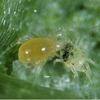
Californicus feeds on all spider-mite stages and searches sheltered areas of the leaves where prey and eggs occur. Its own oval eggs are laid along veins, leaf hairs and other protected places. Because alternative foods help it persist, establishment does not rely on a large spider-mite outbreak already being present. That is useful when a crop has a history of mite pressure and the aim is to build a predator population early.
The species tolerates a broad range of conditions and is particularly useful where heat and drying make management difficult. It is used in field and protected fruit, vegetable and ornamental crops, and indoor plantscapes. Even so, well-watered, healthy plants and suitable humidity still improve establishment. Sachets require extra shelter: their breeding system is for protected cropping and needs to be kept away from direct sun, strong wind and heavy rain. Tube release and sachet placement therefore suit different crop situations.
Inspect likely pest entry points and hotspots, including dry areas, crop edges and windward sides, then monitor marked release locations for pest and predator development. Californicus can be used alongside Persimilis where the programme calls for complementary predators. Its relative tolerance of some residues is not permission to disregard pesticides: harmful products can still disrupt establishment. Check previous treatments, release promptly and keep each format's storage conditions separate so the living material reaches the crop in suitable condition.
NOTE: These are living mites with a short shelf life, so we don't hold them in store. Your order ships fresh, direct from the breeder.
Species image credits: Photo: Institut Agro Montpellier; Novljan, M., Bohinc, T., Kreiter, S., Döker, I. & Trdan, S. (2023), The indigenous species of predatory mites (Acari: Phytoseiidae) as biological control agents of plant pests in Slovenia, Acarologia 63(4):1048-1061, https://doi.org/10.24349/0p4s-gjtm, Figure 4. CC BY 4.0; source; CC BY 4.0. Cropped to square and resized. Photo: İsmail Döker; Novljan, M., Bohinc, T., Kreiter, S., Döker, I. & Trdan, S. (2023), The indigenous species of predatory mites (Acari: Phytoseiidae) as biological control agents of plant pests in Slovenia, Acarologia 63(4):1048-1061, https://doi.org/10.24349/0p4s-gjtm, Figure 5. CC BY 4.0; source; CC BY 4.0. Cropped to square and resized.
Build a mite-predator population before spider mites take over!

Handles Drier Conditions
Robust predators suit demanding mite-management environments
Persists Between Outbreaks
Pollen and alternative prey provide additional food
Supports Continuing Release
Sachets breed predators within protected crop canopies
 Ships Direct
 30-day returns
 Secure checkout
with


 Buy with confidence
-
 Talk to a real grower
Not sure it suits your setup? Call our Youngtown team on
0481 526 666.
-
 Price Beat Guarantee
Found it cheaper elsewhere? We'll
beat any competitor's price by 5%.
-
 Tasmania's own hydroponics shop
Buy online & collect in-store at 2/322 Hobart Rd, Youngtown TAS, usually within the hour.
Bugs for Bugs Neoseiulus californicus
 Key Highlights
expand_more
Key Highlights
- Targets two-spotted spider mite, broad mite and cyclamen mite
- Feeds on all spider-mite life stages
- Loose tubes or protected-crop sachets
- Used in fruit, vegetables, ornamentals and plantscapes
- Can complement Persimilis in a mite programme
 Directions for Use
expand_more
Directions for Use
Application Rate
- Tube releases for prevention: 10 - 25 mites per m² per release; make 3 releases at 2 - 3 week intervals.
- Tube releases for curative treatment: 50 - 100 mites per m² per release, repeated as required at 1 - 2 week intervals.
- Tube releases for hotspots: 100 - 200 mites per m² per release, repeated as required at 1 - 2 week intervals.
- Protected-crop sachets: 1 - 2 sachet pairs per m², repeated as required at 3 - 4 week intervals; position sachets 0.5 - 2 m apart along crop rows.
Application
- Introduce preventatively or at the first signs of pest mites.
- Inspect marked release sites for predators, eggs and pest trends.
- Tube: roll gently to mix. Remove the end cap and breathable cloth, replace the cap as a shaker and distribute the contents over foliage, adding extra material to hotspots.
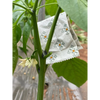
- Slow-release sachets: hang pairs evenly over leaf stems, wires or trellis in the top third of the plants, sheltered within the canopy. Do not puncture or tear them open; tiny exit holes are already present. If extra fastening is needed, place a staple at the bottom of the sachet pair without puncturing the filled breeding system.
- Slow-release sachets: for protected crops only, kept away from direct sunlight, strong wind and heavy rain.
- Rates are guides and depend on the crop and infestation severity.
- Maintain plant health and minimise dust. Relative humidity of at least 60% improves establishment, even though the species tolerates drier conditions than some other predatory mites.
Safety
Check previous pesticide use and side-effects. Avoid pesticides for at least 3 days after release where possible; some insecticides leave harmful residues for many weeks.
Release tube material promptly. If necessary, store tubes on their side for up to 3 days at 10 - 18 °C. Place sachets promptly; if necessary, store them for up to 4 days at 12 - 18 °C.
Beneficial Profile
expand_more
- Scientific Name: Neoseiulus californicus
- Beneficial Type: Predatory Mites
- Target Pests: Two-spotted spider mite; Broad mite; Cyclamen mite
- Tube: 10,000 mites
- Sachets: 10 slow-release sachet pairs
- Preferred Crop Conditions: 16 - 32 °C; 40 - 80% relative humidity
- Sachet Release Period: Typically 3 - 6 weeks, depending on conditions
- Suitable Environments: Fruit, vegetables, ornamentals and plantscapes; sachets for protected crops
10 Pairs / Slow-Release Sachets
- Product Code: NC-1-1
10000 Mites / Tube
- Product Code: NC-1
 Resources
expand_more
Resources
Shipping & Returns
expand_more
Shipping & Returns
Check delivery options for the currently selected item and quantity.
Estimate is for this item and quantity only. Final whole-order freight is confirmed at checkout.
We have a 30-day return policy, which means you have 30 days after receiving your item to request a return.
To be eligible for a return, your item must be in the same condition that you received it, unused, with tags, and in its original packaging. You’ll also need the receipt or proof of purchase.
To start a return, you can contact us at info@hydrooasis.com.au
If your return is accepted, we’ll send you a return shipping label, as well as instructions on how and where to send your package. Items sent back to us without first requesting a return will not be accepted.
You can always contact us for any return question at info@hydrooasis.com.au.

Size: 10 Pairs, Colour: Slow-Release Sachets


