 Visit Us In-Store: 2/322 Hobart Rd, Youngtown TAS






Bugs for Bugs Stratiolaelaps scimitus
Bugs for Bugs Stratiolaelaps scimitus is a soil-dwelling predatory mite used against young fungus gnats, shore flies and other specified pests around the growing medium. Often known as Hypoaspis, it also feeds on thrips that drop to the medium to pupate. That below-foliage activity makes it a useful part of programmes that address different pest life stages in different parts of the crop.
The predators search within suitable porous media and can use algae and plant debris when prey is scarce. This ability to persist at low prey levels supports preventative introductions at propagation or planting, rather than waiting for a heavy fungus-gnat problem. Adults are brown and younger stages are pale, so a close look with a handlens is more useful than expecting them to stand out on the surface.
Suitable applications include greenhouses, nurseries and field crops, as well as phorid and sciarid flies in mushroom production. The mites establish in soil, potting mixes, perlite, coir and rock wool where the medium provides moisture without remaining waterlogged. That balance is important: their need for moisture does not mean they tolerate saturated conditions. Maintaining drainage and avoiding overwatering supports both the crop and the beneficial population.
Apply the mixed carrier directly onto the growing medium and consider other damp areas where fungus gnats breed, such as suitable greenhouse-floor habitat. Continue checking adult pest activity with yellow sticky traps and inspect the medium for mites and larvae. Heavy pest populations may call for complementary measures while the predator establishes, followed by further releases guided by monitoring. Some pesticides and soil drenches remain highly toxic to Hypoaspis, so check previous treatments and compatibility before introducing the living material. Prompt release and correct short-term storage help preserve its usefulness at the point where it reaches the crop.
NOTE: These are living mites with a short shelf life, so we don't hold them in store. Your order ships fresh, direct from the breeder.
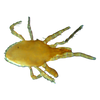
Species image credits: Stratiolaelaps scimitus, BOLD Systems specimen photograph SFWIB006-13 - C. Malo, licence holder Stantec (Centre for Biodiversity Genomics); CC BY 4.0; source; CC BY 4.0. Background and scale bar removed. BOLD record identifies it as Stratiolaelaps miles; BIN BOLD:AAF3914 / GBIF: S. scimitus.
Soil-dwelling predators that tackle fungus gnats where they breed!

Works Below Foliage
Predators hunt where young soil-borne pests develop
Persists At Low Prey
Alternative food helps sustain the mite population
Complements Thrips Control
Feeds on thrips dropping into media to pupate
 Ships Direct
 30-day returns
 Secure checkout
with


 Buy with confidence
-
 Talk to a real grower
Not sure it suits your setup? Call our Youngtown team on
0481 526 666.
-
 Price Beat Guarantee
Found it cheaper elsewhere? We'll
beat any competitor's price by 5%.
-
 Tasmania's own hydroponics shop
Buy online & collect in-store at 2/322 Hobart Rd, Youngtown TAS, usually within the hour.
Bugs for Bugs Stratiolaelaps scimitus
 Key Highlights
expand_more
Key Highlights
- Soil-dwelling mite also known as Hypoaspis
- Targets fungus gnat and shore fly immatures
- Feeds on thrips stages in the growing medium
- Establishes in soil, perlite, coir and rock wool
- Supplied with eggs and mobile mite stages
 Directions for Use
expand_more
Directions for Use
Application Rate
- Preventative greenhouse crops: 50 mites per m² per release.
- Preventative bedding plants: 100 mites per m² per release.
- Seedlings and cuttings at propagation: 500 mites per m² per release.
- 150 mm pots: 50 mites per pot, approximately half a teaspoon of carrier per pot.
Application
- Make an initial preventative release at propagation or planting, followed by a second release 2 weeks later.
- Mix the tub contents immediately before release and apply directly onto the surface of the growing medium. Treat greenhouse floors too where they provide suitable fungus-gnat breeding conditions.
- Monitor adult fungus gnats with yellow sticky traps and inspect the medium with a handlens for predators. Make follow-up releases according to pest pressure and establishment.
- Higher rates may be required for curative treatment; seek crop-specific advice for severe infestations.
- Maintain moisture and drainage, avoiding waterlogging and overwatering. These mites perform best at 20 - 30 °C and can remain active from 10 °C.
Safety
Check pesticide history and side-effects before release. Pyrethroid sprays and some soil drenches are highly toxic to this species.
Release as soon as possible after delivery. If necessary, store on their side for up to 3 days at 10 - 18 °C.
Beneficial Profile
expand_more
- Scientific Name: Stratiolaelaps scimitus
- Beneficial Type: Predatory Mites
- Target Pests: Fungus gnats; Shore flies; Phorid flies; Sciarid flies; Thrips
- Former Name: Hypoaspis miles
- Pack Content: 20,000 living stages, including eggs and mites
- Pack Volume: 1 L
- Carrier: Coco peat and vermiculite
- Product Code: HM-1
- Suitable Media: Soil, perlite, coir and rock wool
 Resources
expand_more
Resources
Shipping & Returns
expand_more
Shipping & Returns
Check delivery options for the currently selected item and quantity.
Estimate is for this item and quantity only. Final whole-order freight is confirmed at checkout.
We have a 30-day return policy, which means you have 30 days after receiving your item to request a return.
To be eligible for a return, your item must be in the same condition that you received it, unused, with tags, and in its original packaging. You’ll also need the receipt or proof of purchase.
To start a return, you can contact us at info@hydrooasis.com.au
If your return is accepted, we’ll send you a return shipping label, as well as instructions on how and where to send your package. Items sent back to us without first requesting a return will not be accepted.
You can always contact us for any return question at info@hydrooasis.com.au.

Size: 20000 Mites
